Rhytidectomy Information
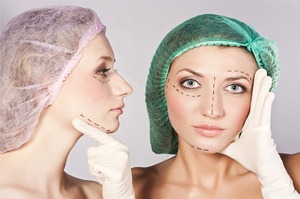
A facelift offers the patient an opportunity to reverse the signs of ageing making you appear more youthful and vibrant. Where skin has become slack due to loss of elasticity, excess lines and sagging occur. A facelift does just what it says on the label – it lifts the face, reducing lines and tightening the skin. Many people who have this surgery not only report a look of vitality but also a feeling of vitality afterwards.
You can regain your youth. A facelift is more permanent and more effective than Botox and does not require numerous trips every year to your clinic. A facelift will also give you a very natural look helping to restore your youthful appearance. Look ten years younger in two hours!
- Who is it for?
- People who have excessive lines or sagging on their face which can make them look older.
- People who have dropped jowls or a double chin or a lined mouth due to ageing or genetics.
- People who have sagging of the skin on their face due to weight-loss and who are unhappy with it.
- Those who have premature ageing due to excessive sun exposure or smoking.
- What can I expect?
- The overall appearance of the skin on your face and neck after surgery will be that of smoother, tighter and more firm skin. This in turn gives a more youthful look which can last for many years. It is important to remember that a facelift does not stop or slow down the ageing process. Your skin will look more taught and younger after surgery but the natural ageing process will still continue afterwards.
- What does surgery involve?
There are several different ways in which facelift surgery can be performed. A consultation with your surgeon will help you to decide what exactly you are looking for and therefore which type of procedure is best for you. Your surgeon will explain the procedure during your consultation.A facelift is performed under general anaesthetic and usually lasts between 2-3 hours. During this time incisions are made in the hairline, behind the ears or underneath the chin. These incisions enable the surgeon to manoeuvre the tissue and skin to create a smooth and more taught appearance. Stitches are then used to close the incisions and to hold them in place. People will often combine facelift surgery with blephaorplasty (eyelid surgery) or a brow-lift to reduce the signs of ageing even more.
- What will recovery look like?
Swelling and bruising may be evident after surgery but will begin to subside during the first week. You may be asked to wear bandages and to keep your head elevated for the first couple of days to help reduce the swelling. We advise that you do not fly for at least 10 days after surgery. Any stitches will be removed during your follow up consultation.
It is advisable to have between 2 and 3 weeks off work and not to do any exercise for at least 8 weeks.
- What are the possible risks or complications?
Rhytidectomy is one of the most commonly performed cosmetic procedures and generally is done without complications. All surgery however does carry and element of risk. Complications can include an unexpected reaction to the anaesthetic, bleeding, infection or clot formation. These risks are minimised by experienced surgical technique, specialist care and by using highly qualified surgeons and nursing staff.The risks are minimised by making sure that you are in good general health before your operation. Your consultation with your surgeon will give you advice on how best to achieve this as well as letting you know of any risks which may apply to you.
Contact Us For A Free Consultation

Grainne Farrell – CEO & Founder
We are here to answer any questions you may have about our services. Reach out to us and we’ll respond as soon as we can!
Call us anytime
AUS +61(02) 80061629
UK +44(0) 2071933595
TH +66(0) 920701808
Email Us
Free Online Consultation
Our Procedures
Our Awards